The weighbridge ticket: what must be on it and where it goes next
What a weighbridge ticket should show, gross, tare and net, the stored tare trap, and how the ticket, the transfer note and the DEFRA record must agree.

LoadSnap team
Running a waste business
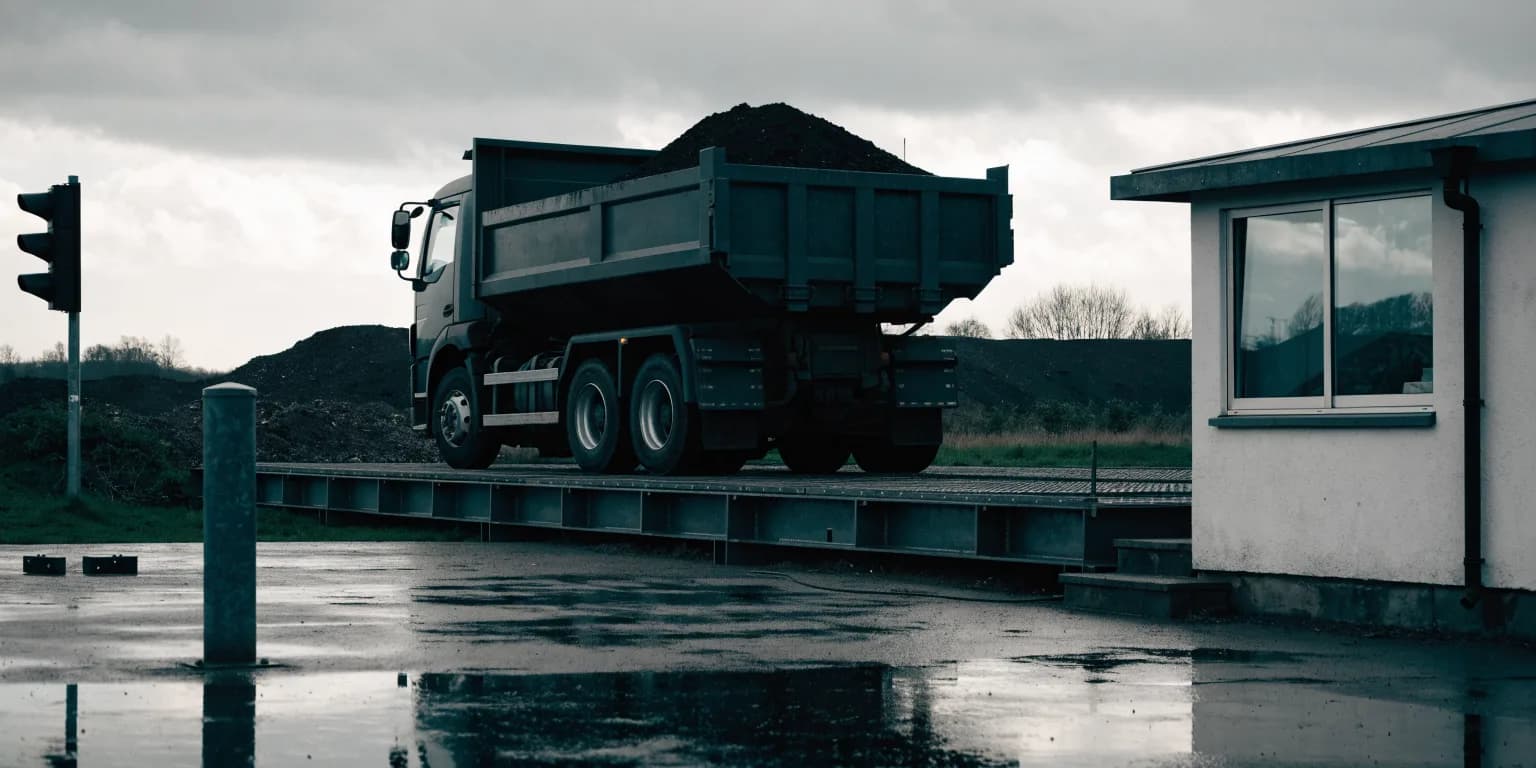
One load ends up described three times: on the weighbridge ticket, on the transfer note and in the DEFRA record. When the three disagree, someone has to sort it out, usually the person who least wants to. Here is what a ticket should show, the trap in a stored empty weight, and how to keep all three in step.
What a weighbridge ticket must show
The law sets the rules for the weighbridge more than for the ticket. If a weight decides what someone pays, the bridge is in "use for trade" under the Weights and Measures Act 1985, and it must be passed as fit for use for trade by a weights and measures inspector or an approved verifier. After a repair or adjustment it has to be passed again (gov.uk).
A public weighbridge, one that weighs for anyone for a fee, has firmer rules. The person weighing must hold a certificate of competence from trading standards, must give the customer a written statement of the weight, and must record the date, time, vehicle and load and keep that record for at least two years (section 20).
For a waste site's own bridge there is no set layout, but a ticket that will stand up to a question carries these lines:
- Ticket number
- WB-104233 (made up)
- Site and permit number
- The receiving site's name, address and permit number
- Weighbridge
- Bridge 1, the bridge in
- Date and time
- Both weighings, in and out
- Vehicle
- The registration
- Carrier
- The firm that brought the load, with its registration number
- Waste
- Mixed construction and demolition waste, 17 09 04
- Gross
- 18,420 kg
- Tare
- 11,960 kg
- Net
- 6,460 kg
- Weighed by
- The operative's name
Gross, tare and net, and the stored tare trap
Gross is the loaded vehicle. Tare is the same vehicle empty. Net, the waste, is the difference. The honest way to get the tare is to weigh the vehicle twice: in loaded, out empty.
Many yards save time with a stored tare: an empty weight taken once and used again on later visits. It works until something changes, and on a waste vehicle something nearly always does:
- Fuel. A full tank can weigh a few hundred kilograms more than a nearly empty one.
- Crew. A second person in the cab is another 80 kg or so on every load.
- The body. A hooklift weighs whatever body it has on the back, and a skip loader whatever skip. One stored figure cannot be right for both a small skip and a big roll-on.
- The kit. Chains, sheets, a tool box, mud on the chassis.
Every kilogram of error lands on the net, and so on the invoice, the transfer note and the DEFRA record. There is no legal rule on how often to weigh out empty. A fair habit is to weigh out whenever the vehicle, body or crew is different, and refresh any stored tare at least every few months. For hooklifts and skip loaders, weigh out every time.
The ticket and the transfer note
The transfer note and the ticket describe the same handover, so these must match: the date, the vehicle registration, the waste description and code, and the quantity.
The driver usually writes an estimate on the note when the skip is lifted, because nothing has been weighed. Once the load crosses the bridge, the ticket weight replaces that estimate. Write the net weight on the note, or staple the ticket to it, so anyone reading the note later sees the real figure. If the ticket says 17 09 04 and the note says 20 03 01, one of them is wrong, and it needs fixing before the record goes anywhere. Our filled-in transfer note shows where the weight goes.
The ticket and the DEFRA record
Since 1 October 2026, permitted receiving sites in England and Wales report each load they take in to DEFRA within two working days. The Digital Waste Tracking (England) Regulations 2026 require the weight under each waste code, the unit, and whether the weight is estimated or actual, along with the vehicle registration and the date and time the waste arrived.
The weighbridge ticket is the evidence behind the weight the site reports as actual. If a regulator asks where a figure came from, the answer is a ticket number. A site with no bridge can report an estimate, but it has to say so. Our DEFRA digital waste tracking guide and our post on digital waste tracking cover the rest.
Two bridges, one site
Plenty of sites run a bridge in and a bridge out, or two bridges on different parts of the yard. The ticket should say which bridge did the weighing. If one bridge drifts out of tolerance, you need to know which loads it weighed, and without the bridge on the ticket that means checking every load from the period.
LoadSnap reads the weight straight from the indicator on your existing weighbridge and records which bridge weighed each receipt. It only offers a stored empty weight from that vehicle's own weighings at your site, holds it back when the figure is more than 90 days old or the vehicle's empty weights have varied by more than 250 kg, and prints on the ticket where each weight came from.
Questions people ask
Do I need a certified weighbridge?
If you charge by weight, yes: the bridge must be passed as fit for use for trade, and passed again after repairs. If you weigh for the public for a fee, whoever operates it also needs a certificate. Your local trading standards office can advise.
How long do I keep tickets?
A public weighbridge must keep its records for two years. For a site's own bridge there is no separate rule, so keep each ticket with its transfer note, which is kept for two years. A landfill operator should keep them longer: HMRC's landfill tax guide asks for six years of records.
Keep your bridge, add the paperwork
See how LoadSnap reads weights from your existing weighbridge and turns each one into a receipt ready for DEFRA. Nothing on the bridge changes, and there is nothing to buy for it.
LoadSnap team
Running a waste business
Written by the team building LoadSnap, the UK waste compliance platform for carriers and receivers.
Keep reading

Do you need to report the waste you receive? DEFRA's guidance, read from the weighbridge
Oct 8, 2026 · 8 min

Upper tier or lower tier: which waste carrier licence you need and what it costs
Oct 4, 2026 · 5 min

Season tickets: when one transfer note can cover a year
Oct 4, 2026 · 5 min
Digital waste tracking is live
The mandate is here.
Automate compliance.
Receiving sites in England and Wales have had to record every load digitally since 1 October 2026. Start a 14-day free trial in minutes, cancel any time before it ends, and file every load from day one.
DEFRA API integrated · EA carrier verification · UK data residency