Daily walkaround checks for skip loaders and hooklifts
The DVSA daily walkaround check, plus the extra checks for skip loader arms and chains, hooklift hooks and sheets, and how to report a defect so it gets fixed.

LoadSnap team
Running a waste business
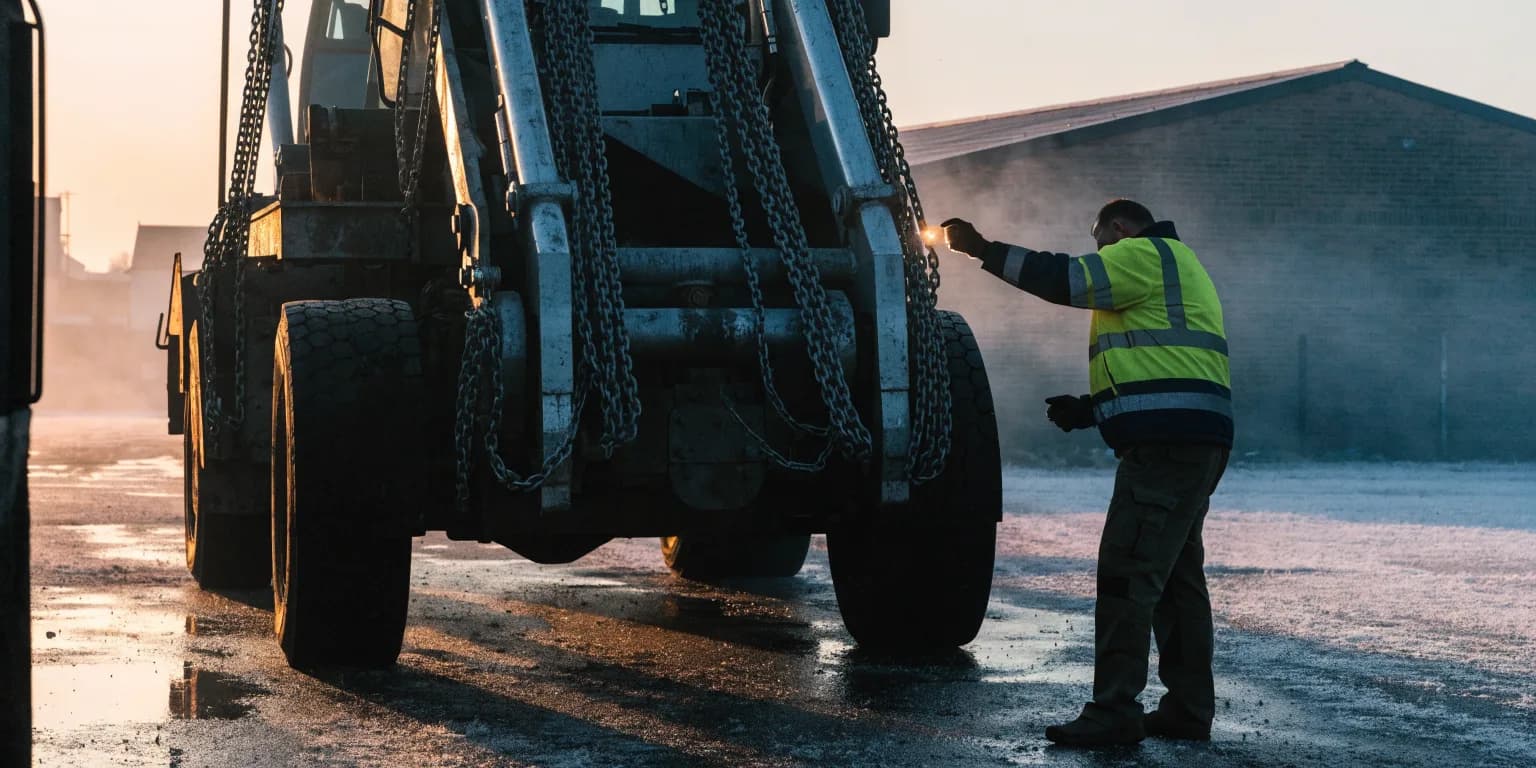
The DVSA walkaround checklist was written for every heavy goods vehicle on the road. A skip loader or a hooklift has more to go wrong: arms, chains, hooks and hydraulics that lift several tonnes over people's heads. Here is the standard check done quickly, then the extra checks for your type of vehicle, and how to write up a defect so it actually gets fixed.
What the law asks
The driver is responsible for the vehicle being safe to drive. DVSA's guide to maintaining roadworthiness says a driver or another responsible person must do a walkaround check before the vehicle is used on the road, and at least once in every 24 hours it is in service. Defects must be reported in writing to whoever sorts out repairs, and dangerous ones fixed before the vehicle moves. Using an HGV in a dangerous condition can mean an unlimited fine and prison.
The lifting gear has a second set of rules. The HSE treats the lifting equipment on skip loaders and hooklifts as covered by LOLER, the Lifting Operations and Lifting Equipment Regulations 1998. That means a thorough examination by a competent person at least every 12 months, and every six months for lifting accessories such as chains, unless a written scheme of examination sets other dates (regulation 9). The daily check is what keeps the vehicle safe between those visits.
The standard walkaround, quickly
The DVSA walkaround guidance lists 27 items. Done in the order you walk round the vehicle, it looks like this:
| Where | What to check |
|---|---|
| In the cab | Mirrors, cameras and glass; wipers and washers; warning lights and gauges; steering; horn; brakes and air build-up; height marker set right; seatbelts. |
| Front | Lights and indicators; number plate; windscreen from outside; reflectors; cab, doors and steps secure. |
| Nearside | Tyres and wheel nuts; spray flaps; fuel and oil leaks underneath; battery secure; AdBlue level; body and wings secure. |
| Rear | Lights, reflectors and markings; number plate; load secure; exhaust smoke when running. |
| Offside | Tyres and wheel nuts; spray flaps; fuel cap; leaks; body secure; any trailer couplings and air lines. |
The extra checks for a skip loader
The HSE's own pocket card for skip loader drivers says to check the lifting equipment every day, including the controls, hooks, chains and hoses. On a skip loader, that means:
- 01Arms and pivots. Cracks in the welds, bent arms, worn or loose pivot pins, missing retaining clips.
- 02Hydraulic hoses and rams. Leaks, weeping fittings, chafed or bulging hoses, scored ram rods. The HSE counts the cylinders and their pipework as safety critical.
- 03Chains and hooks. Stretched, bent, cracked or worn links, twists or knots, hooks opened up or with a missing or broken safety catch. Any doubt, take the chain out of use.
- 04Stabiliser legs. They go down and up smoothly, hold without creeping, and the feet are intact.
- 05Control box. Every lever works and returns to neutral, labels are readable, and the emergency stop works.
- 06Securing the skip. Arms fully lowered for travel, chains stowed, and whatever holds the skip on the bed in good order.
The extra checks for a hooklift and RoRo
The HSE says hooklifts are lifting equipment too, because loading a container lifts its front end before dragging it on. The hook is the part that matters most.
- 01The hook. Wear in the throat, cracks, and a safety latch that closes properly.
- 02The locking mechanism. The container locks at the rear of the body engage fully and the warning light, where fitted, works.
- 03The rollers. They turn freely, are not flat-spotted, and are not packed with debris.
- 04Hydraulics. The same hose and ram checks as a skip loader, with special care on the main lift rams.
- 05The sheeting system. The arm, the sheet and the ropes or straps are undamaged and work from the ground.
- 06Once loaded. The container is sitting square on the rollers, the locks are on, and the sheet covers the load.
Writing up a defect so it gets fixed
A defect report that says "hydraulics" will sit in a tray. DVSA's guide lists what a report should record: the vehicle, the date, the defect, who found it, who it was reported to, how serious it is, what was done to fix it and when. In practice, a good report answers four questions:
- What. "Hose weeping oil", not "leak".
- Where. "Nearside lift ram, top fitting."
- How bad. Dangerous, or can it wait until tonight.
- Can it be driven. The driver's honest view, and the reason.
The report goes to someone with the authority to take the vehicle off the road. When the repair is done, that person or the fitter records what was done and the date, so anyone reading it later can see the defect was closed. DVSA also suggests recording "nil" when nothing is wrong, which shows the check was done.
LoadSnap's driver app has a daily vehicle check. The driver marks each item as fine or as an issue, and an issue takes a note and a photo there and then, recorded against the vehicle and the driver. The office can add its own items to the list, so a skip loader's arms and chains or a hooklift's hook sit beside the standard ones.
Questions people ask
How long should a walkaround take?
DVSA does not set a time. It wants every item checked properly. Fifteen minutes is the figure most of the industry quotes for a standard HGV, and a skip loader or hooklift with lifting gear to look over will take longer.
Do I need to keep the records?
Yes. DVSA's guide says driver defect reports, and safety inspection records, must be kept for at least 15 months, and DVSA can ask to see a walkaround record at a roadside check.
Run vehicle checks in the driver app
See how walkaround checks, defects and MOT dates are kept together on the fleet and vehicle page, and which plan includes them on the pricing page.
LoadSnap team
Running a waste business
Written by the team building LoadSnap, the UK waste compliance platform for carriers and receivers.
Keep reading

Do you need to report the waste you receive? DEFRA's guidance, read from the weighbridge
Oct 8, 2026 · 8 min

Upper tier or lower tier: which waste carrier licence you need and what it costs
Oct 4, 2026 · 5 min

Season tickets: when one transfer note can cover a year
Oct 4, 2026 · 5 min
Digital waste tracking is live
The mandate is here.
Automate compliance.
Receiving sites in England and Wales have had to record every load digitally since 1 October 2026. Start a 14-day free trial in minutes, cancel any time before it ends, and file every load from day one.
DEFRA API integrated · EA carrier verification · UK data residency