Which EWC code for a skip? The six that cover most loads
Which EWC code to use for mixed builders' waste, general waste, soil, plasterboard, wood and metal, and the mistakes that get skips rejected.

LoadSnap team
UK waste compliance
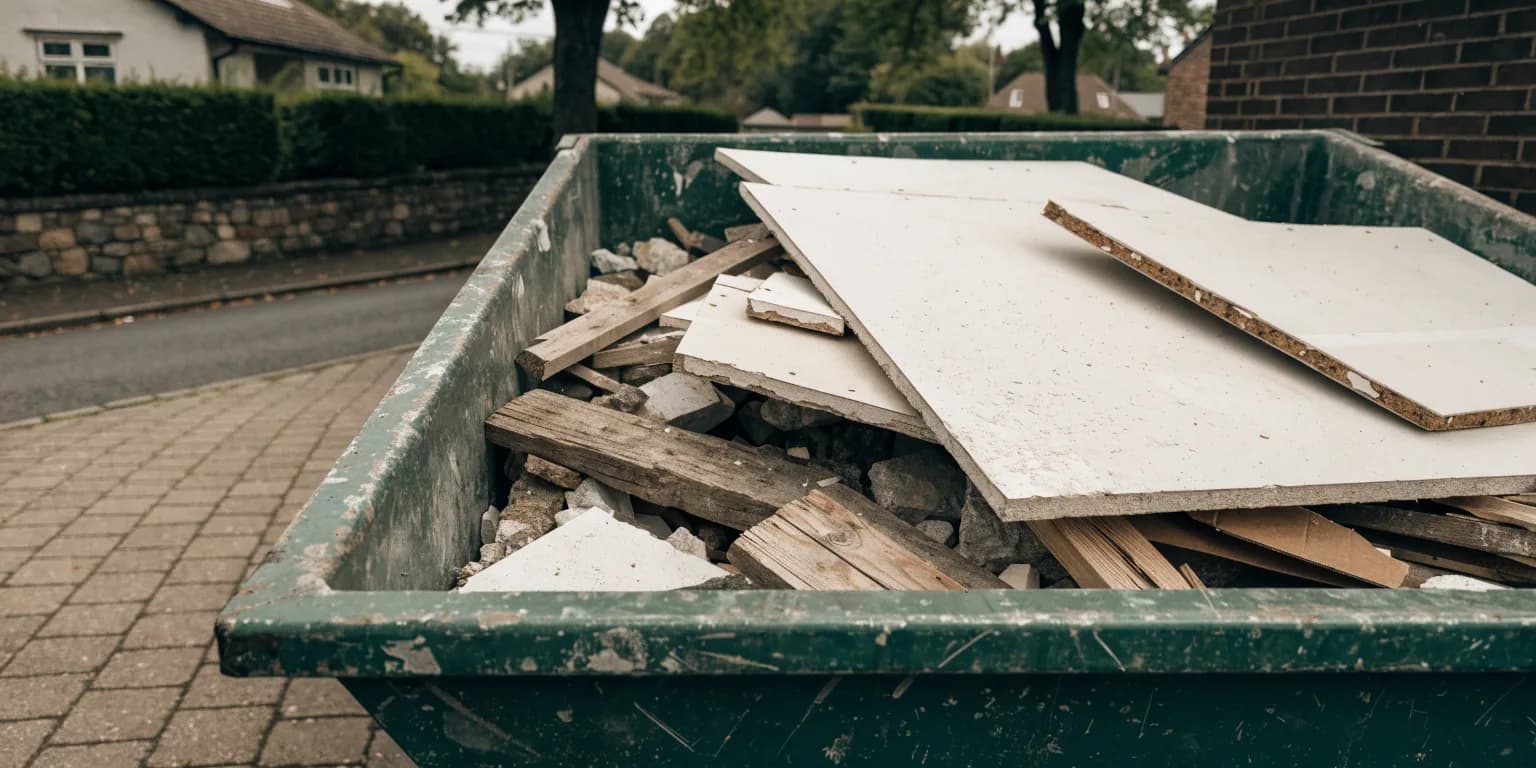
The List of Wastes runs to more than 800 codes, and a skip firm uses about six of them for nearly every load. Pick the wrong one and the note is wrong, the tip may reject the load, and since 1 October 2026 the mistake goes straight into the receiving site's DEFRA record. Here are the six, where the line falls between them, and the loads that catch people out.
How a waste code is built
An EWC code is six digits in three pairs. The first pair is the chapter, which says where the waste came from. The second is the section within that chapter. The third is the entry itself. An asterisk on the end means the waste is hazardous.
| Pair | Means | For 17 09 04 |
|---|---|---|
| 17 | Chapter: where it came from | Construction and demolition wastes |
| 09 | Section within the chapter | Other construction and demolition wastes |
| 04 | The entry | Mixed, with nothing hazardous in it |
The list itself says to start with the source of the waste, in chapters 01 to 12 or 17 to 20. For a skip firm that nearly always means chapter 17, construction and demolition, or chapter 20, municipal waste.
Mixed builders' waste: 17 09 04
17 09 04 is "mixed construction and demolition wastes other than those mentioned in 17 09 01, 17 09 02 and 17 09 03". In plain words: a mix of building waste with nothing hazardous in it. Rubble, timber, old units, tiles, packaging off the job and a bit of metal all sit happily under it.
It is the right code for most builders' skips, from a kitchen refit to a loft conversion. It stops being right the moment something hazardous is mixed in. Asbestos sheet, contaminated soil, tins of solvent paint or treated timber with hazardous preservative turn the mix into 17 09 03*, "other construction and demolition wastes (including mixed wastes) containing hazardous substances", which needs a consignment note instead of a transfer note. Better still, the hazardous item comes out before the skip is collected.
If a skip holds only hardcore, such as concrete, brick and tile, 17 01 07, mixtures of concrete, bricks, tiles and ceramics, fits better, and is often cheaper to tip.
General waste: 20 03 01, and why it is wrong for most skips
20 03 01 is "mixed municipal waste". Chapter 20 covers household waste and similar waste from shops, offices and other businesses: the black bag rubbish of daily life.
A builder's skip is not that, even if it looks like rubbish. The definition of municipal waste in the Waste Framework Directive, which still applies in the UK, says plainly that it does not include construction and demolition waste. So the waste from a kitchen refit is chapter 17, even though it came out of a house. Putting 20 03 01 on a builder's skip is one of the commonest mistakes on skip notes.
It is the right code for a house clearance skip full of household items: old furniture, clothes, toys and kitchen rubbish, with no building work involved. A clearance that also strips out a bathroom is two kinds of waste, and the bathroom part is chapter 17.
Soil and stones: 17 05 04
17 05 04 is "soil and stones other than those mentioned in 17 05 03". Its hazardous twin, 17 05 03*, is "soil and stones containing hazardous substances". A pair like this is called a mirror entry: the same material, and the code depends on what is in it.
Soil dug from a back garden or a greenfield plot, with no history of industry, is usually 17 05 04 without any test. Soil from an old garage, a factory site or made ground, or soil that smells of fuel or has ash and clinker in it, needs testing before anyone can say which code applies. Landfills also want acceptance testing for some loads. Our post on WAC testing for soil explains both.
Clean soil matters for money too. Naturally occurring sub-soil, clay, sand, gravel and stone can qualify for the lower rate of landfill tax, £8.65 a tonne against £130.75 (gov.uk). HMRC's landfill tax guide says topsoil does not qualify, and a load mixed with other waste can lose the lower rate. Our post on landfill tax and skip prices has the sums.
Plasterboard: 17 08 02
17 08 02 is "gypsum-based construction materials other than those mentioned in 17 08 01". That means plasterboard, plaster and other gypsum products, kept on their own.
It has to be kept separate because gypsum and rotting waste do not mix. Buried together, they can produce hydrogen sulphide, a toxic gas that smells of bad eggs. The government's landfill guidance says gypsum-based waste must not go to a landfill cell that takes biodegradable waste, and should be separated for reuse or recovery first. Plasterboard recycles well, so most transfer stations want it on its own.
Tell customers before the skip arrives: plasterboard in bags or a separate skip, not in with the mixed waste. If it turns up in a mixed skip, expect the site to pick it out and charge you for it, or to turn the load away, depending on how much there is and what the site can handle.
Wood, metal and green waste: the quick ones
| Code | List of Wastes wording | Use it for |
|---|---|---|
| 17 02 01 | Wood | A skip of untreated timber from building work. Treated wood with hazardous preservative is 17 02 04*. |
| 17 04 05 | Iron and steel | Steel beams, rebar, old radiators kept separate. Mixed metals are 17 04 07. |
| 20 02 01 | Biodegradable waste | Garden waste: grass, hedge cuttings, branches. Soil and stones from a garden are 20 02 02. |
All three are worth separating where you can. A skip of one clean material is easier to recycle and usually cheaper to tip than the same material mixed.
What does an asterisk mean?
An asterisk means the waste is hazardous. Some codes are hazardous whatever the amount, called absolute entries. Asbestos, 17 06 05*, is one. Others come in mirror pairs, like soil, where one code has an asterisk and its twin does not, and you choose between them by finding out what is in the waste. That assessment follows the Environment Agency's waste classification guidance, known as WM3, and for soil it usually means a lab test. Our post on soil testing and the glossary entry on mirror entries go further.
Questions people ask
How do I get an EWC code?
You do not apply for one. You choose the code that describes the waste, from the published list, and write it on the transfer note. The person handing the waste over is responsible for getting it right, though in practice the skip firm often does it for them.
What is the EWC code for general waste?
20 03 01, mixed municipal waste. But it is only right for household and similar rubbish. A skip of building waste is 17 09 04.
LoadSnap suggests a code from the driver's photo and a plain description, and keeps the codes you used recently to hand, so the right one goes on the note without anyone looking it up.
Not sure which code?
Search the free EWC code finder, or describe the load to the free AI waste classification tool. Then put the code on a complete transfer note.
LoadSnap team
UK waste compliance
Written by the team building LoadSnap, the UK waste compliance platform for carriers and receivers.
Keep reading

Do you need to report the waste you receive? DEFRA's guidance, read from the weighbridge
Oct 8, 2026 · 8 min

Upper tier or lower tier: which waste carrier licence you need and what it costs
Oct 4, 2026 · 5 min
Season tickets: when one transfer note can cover a year
Oct 4, 2026 · 5 min
Digital waste tracking is live
The mandate is here.
Automate compliance.
Receiving sites in England and Wales have had to record every load digitally since 1 October 2026. Start a 14-day free trial in minutes, cancel any time before it ends, and file every load from day one.
DEFRA API integrated · EA carrier verification · UK data residency